State-of-the-art lectures

About the State-of-the art lectures at EASL Congress 2026
The State-of-the-Art lectures feature key opinion leaders and authorities from various fields, and offer insights into the latest developments that are shaping the future of hepatology.

Postgraduate Course State-of-the-Art: The next genomics frontier: from risk prediction to digital twins
Wednesday, 27 May, 17:00 - 17:45 CEST
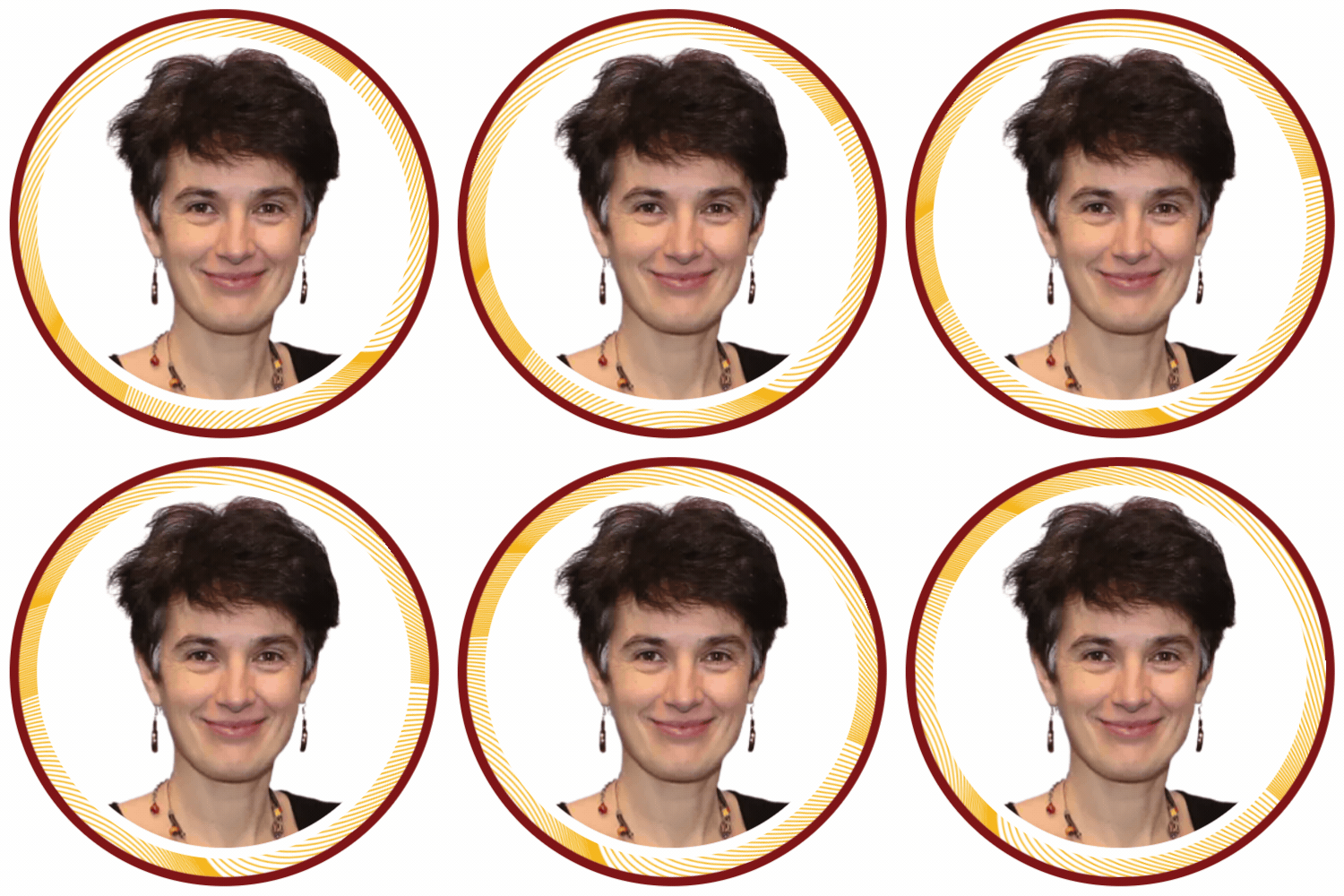
Mihaela van der Schaar
Professor of Machine Learning, AI and Medicine
University of Cambridge
United Kingdom
Mihaela van der Schaar is the John Humphrey Plummer Professor of Machine Learning, Artificial Intelligence and Medicine at the University of Cambridge. In addition to leading the van der Schaar Lab, Mihaela is founder and director of the Cambridge Centre for AI in Medicine (CCAIM).
Mihaela was elected IEEE Fellow in 2009 and Fellow of the Royal Society in 2024. She has received numerous awards, including the Johann Anton Merck Award (2024), the Oon Prize on Preventative Medicine from the University of Cambridge (2018), a National Science Foundation CAREER Award (2004), 3 IBM Faculty Awards, the IBM Exploratory Stream Analytics Innovation Award, the Philips Make a Difference Award and several best paper awards, including the IEEE Darlington Award. She was a Turing Fellow at The Alan Turing Institute in London between 2016 and 2024. In 2025, she was appointed as Spinoza Guest Professor at Amsterdam University Medical Center.
Mihaela is personally credited as inventor on 35 USA patents (the majority of which are listed here), many of which are still frequently cited and adopted in standards. She has made over 45 contributions to international standards for which she received 3 ISO Awards. In 2019, a Nesta report determined that Mihaela was the most-cited female AI researcher in the U.K.
About this lecture
As machine learning increasingly intersects with biology and medicine, the field stands at a critical inflection point. Predictive models built on genomic and multi-omics data have achieved remarkable success in estimating disease risk and stratifying patients. However, these models remain fundamentally static, offering snapshots rather than simulations, and associations rather than actionable insights. In parallel, the rise of AI agents and digital twins introduces a new paradigm, dynamic, interactive systems that leverage longitudinal clinical biomarkers to reason about interventions, simulate outcomes, and adapt as new patient data becomes available.
This talk will outline a path connecting these two powerful yet currently disjoint paradigms. It will begin by revisiting foundational work on self-supervised learning for genomic risk estimation and multi-view supervised learning for multi-omics integration, approaches that enable the learning of rich, structured representations of biological data. It will then explore more recent developments in AI agents and digital twins designed to simulate individual disease trajectories and model personalised responses to therapeutic interventions.
The talk will conclude by addressing what may represent the next frontier, the need to develop a new generation of digital twins grounded not only in clinical biomarkers but also in the molecular complexity of each individual. By integrating time-series clinical data with genomic and multi-omics signals, it becomes possible to create AI agents capable of reasoning about both the dynamic progression of disease and the biological predispositions that shape it. Such systems could enable truly personalised digital twins, with the potential to transform clinical care through earlier diagnosis, more precise prognosis, and tailored therapeutic strategies, ultimately improving patient outcomes based on each individual’s unique biological profile.
Learning objectives
- Understand the strengths and limitations of genomic and multi-omics based predictive models
- Distinguish between static models and dynamic AI agents and digital twins
- Explain how self-supervised and multi-view learning support biological data integration
- Describe how digital twins can simulate disease trajectories and treatment responses
- Recognise the potential of integrated clinical and molecular data for personalised care
Karl Wilhelm von Kupffer basic science State-of-the-Art: Bile acid signalling
Thursday, 28 May, 14:00 - 14:45 CEST
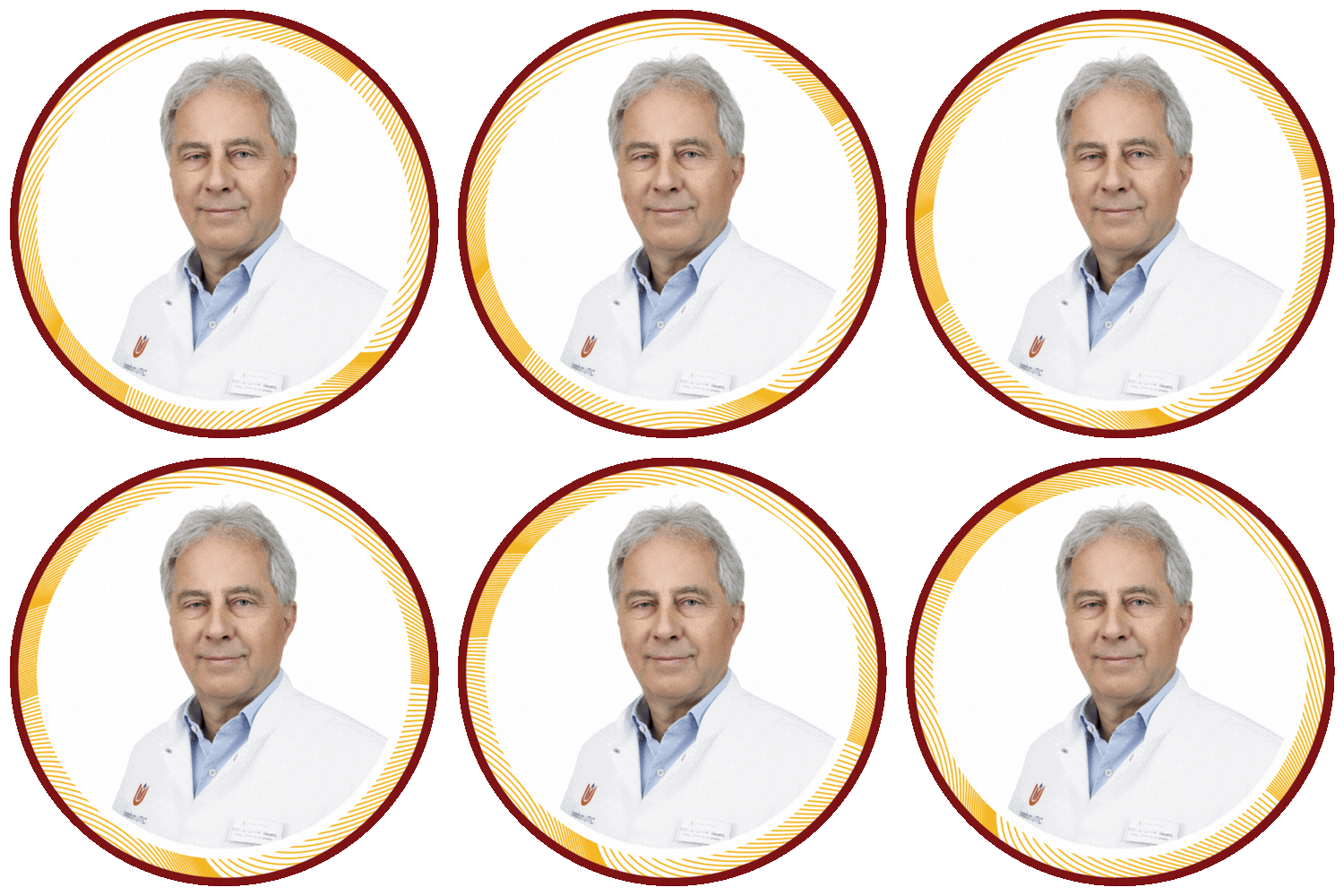
Ulrich Beuers
Department of Gastroenterology & Hepatology
Amsterdam University Medical Centre
Amsterdam, the Netherlands
Ulrich Beuers is Professor emeritus at Amsterdam University Medical Centre and a specialist in Hepatology, Gastroenterology and Internal Medicine. He completed his medical education in Gent, Berlin and Freiburg and pursued postdoctoral training in Biochemistry at the University of Göttingen, followed by clinical training in Munich, where he obtained his habilitation. He held research appointments at Yale University and became Professor of Internal Medicine in Munich in 2001, later moving to Amsterdam as Professor of Gastroenterology and Hepatology and Chair of Hepatology from 2010 to 2023.
His research has focused for several decades on the pathogenesis and treatment of immune mediated cholestatic liver diseases, with particular emphasis on the role of bile acids. Professor Beuers has published more than 650 peer reviewed articles and has been an invited speaker at scientific meetings in over 35 countries. He served for 18 years as Assistant and Associate Editor of the Journal of Hepatology and held numerous leadership roles, including Chair of the Netherlands Association for the Study of the Liver and member of the EASL Governing and Executive Boards.
Professor Beuers has chaired and contributed to several European clinical guidelines, mentored 40 doctoral fellows, and received many national and international awards, including the EASL Recognition Award in 2025.
About this lecture
The hydrophobic bile acid (BA) taurolithocholic acid (TLCA), a secondary bile acid in humans, has experimentally been documented to induce cholestasis and liver cell injury in the 1960ies1. Signaling properties of TLCA stronger than those induced by primary BA were demonstrated since the late 1980ies2. Experimental reversal of TLCA-induced cholestasis by pharmacological inhibition of posttranscriptional TLCA signaling was shown in the early 2000s3. At the same time, the hydrophilic tertiary BA tauroursodeoxycholic acid (TUDCA) was unraveled as a potent anticholestatic and cytoprotective posttranscriptional activator of complex signaling pathways different from TLC via dual MAPK- and integrin-dependent and Ca++/type II inositol-1,4,5-triphosphate receptor/cPKCα/PKA-dependent mechanisms in healthy and cholestatic livers, respectively4-11. For individuals with the most frequent chronic cholestatic disorder, primary biliary cholangitis, therapy with UDCA due to its beneficial effects on cholestasis, inflammatory activity and long-term prognosis is today established12 and for various other cholestatic disorders under evaluation, but widely used13, 14.
With the identification and characterization of nuclear BA receptors15 like the farnesoid X receptor (FXR)16, the pregnane X receptor (PXR), the constitutive androstane receptor (CAR) or the vitamin D receptor (VDR), and membrane BA receptors like Takeda G protein-coupled receptor 5 (TGR5)17 and others a new dimension of BA research was evolving in the early 21st century leading to increasing understanding of transcriptional regulation of synthesis, transport and metabolism of BA and carbohydrate, lipid and amino acid metabolism15, 18. Consequently, development of innovative therapeutic interventions such as the therapeutic BA norucholic acid (NCA) – like TUDCA an activator of the cholangiocellular chloride channel anoctamin-1 and TGR5 rescuer, and a mTOR inhibitor in immune cells -, steroidal and nonsteroidal FXR, PXR and TGR5 agonists or intestinal and hepatic BA uptake inhibitors in hepatobiliary diseases has been made possible and is ongoing19.
This lecture will explore recent advances in our understanding of transcriptional and posttranscriptional bile acid signaling, focusing on its role in hepatobiliary (patho-) physiology and potential therapeutic interventions. Attendees will gain insights into emerging novel therapeutic BA targets and future directions in basic and translational bile acid research.
Learning objectives
- Bile acids (BA) as potent signaling molecules in liver, bile ducts and intestine
- BA-induced transcriptional vs. posttranscriptional signaling
- Signaling of therapeutic vs. potentially toxic BA
- Therapeutic modulation of BA synthesis and enterohepatic circulation
- Future therapeutic developments related to BA signaling
Jean-Pierre Benhamou clinical State-of-the-Art: The promise and pitfalls on non-invasive testing
Friday, 9 May, 14:00 - 14:45 CEST
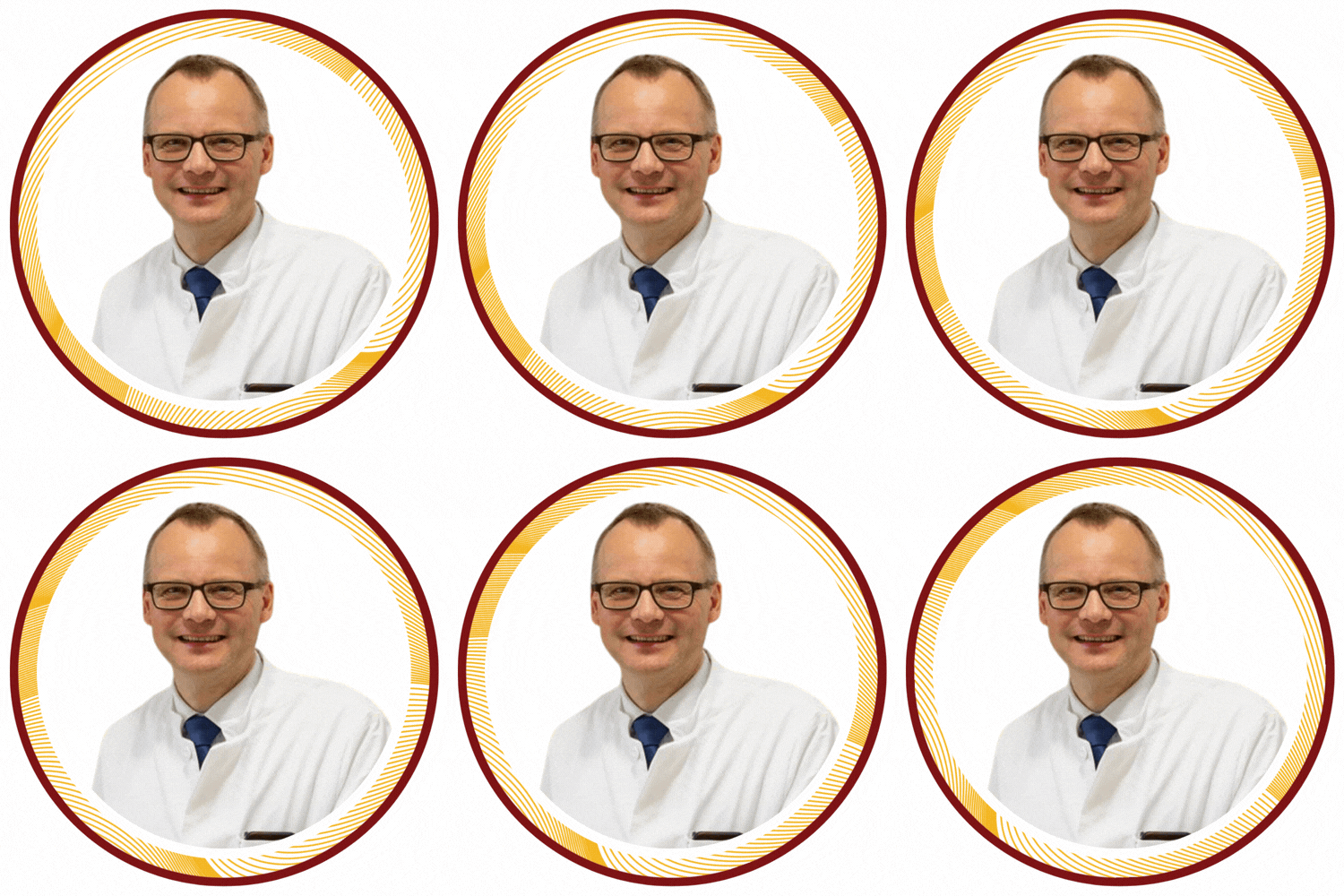
Heiner Wedemeyer
Director of the Department of Gastroenterology, Hepatology, Infectious Diseases, and Endocrinology
Hannover Medical School
Hannover, Germany
Heiner Wedemeyer is Professor and Chairman of the Department of Gastroenterology, Hepatology and Endocrinology at Hannover Medical School since April 2020. He previously held the same chair at University Clinic Essen from 2018 to 2020.
He received his medical degree from the University of Göttingen in 1996 and completed his specialist training in Internal Medicine and Gastroenterology at Hannover Medical School, where he became Professor of Medicine in 2011. From 1998 to 2000, he was a research fellow in immunology at the National Institutes of Health in Bethesda, USA.
Professor Wedemeyer has played a leading role in the German Network of Competence on Viral Hepatitis and the German Liver Foundation for over 15 years and currently serves as Managing Director of the German Hepatitis C Registry. He was Secretary General of the European Association for the Study of the Liver from 2009 to 2011.
His research focuses on viral hepatitis, liver transplantation and hepatocellular carcinoma. He has led numerous clinical trials on antiviral therapy and immunotherapy for hepatitis B, C, D and E and has authored over 500 original publications, with an H Index of 98 and more than 42,000 citations. He has received several international awards and his research is supported by major national and international funding bodies.
About this lecture
Over the past decade, viral hepatitis care has evolved substantially, driven by major advances in antiviral therapies, diagnostics, and models of care delivery. These developments have improved clinical outcomes and reshaped clinical decision-making, while also supporting ambitious public health goals such as the elimination of viral hepatitis. At the same time, the field continues to move rapidly, with ongoing innovation raising important questions about how best to translate progress into sustainable, real-world impact.
This session will examine the direction in which viral hepatitis care is heading over the near future. It will address how innovation in treatment, diagnostics, and care delivery is altering clinical decision-making and long-term disease control. The discussion will span from population-level elimination efforts to disease-specific advances in hepatitis B and D, with a particular focus on how these developments are expected to translate into meaningful clinical impact.

Learning objectives
- To review how the development of highly effective direct-acting antivirals has transformed hepatitis C management, and to discuss why targeted micro-elimination strategies are pivotal to achieving the WHO 2030 elimination goals.
- To examine emerging and novel biomarkers in chronic hepatitis B, and to understand how these tools are expected to refine risk stratification, treatment selection, and future therapeutic endpoints.
- To summarize the evolving therapeutic pipeline for hepatitis B and to explore how forthcoming agents are likely to shift current treatment paradigms toward finite therapy and functional cure.
- To highlight the clinical relevance of hepatitis D as a rapidly progressive and frequently underdiagnosed disease, and to outline recent advances in HDV therapy, including the approval of the first virus-specific agent and the ongoing phase III clinical development programmes.